Bandeja paisa
Contains allergens
- Author
- Equipo Cocinoa
- Preparation time
- 5 hr
- Servings
- 4
Summary
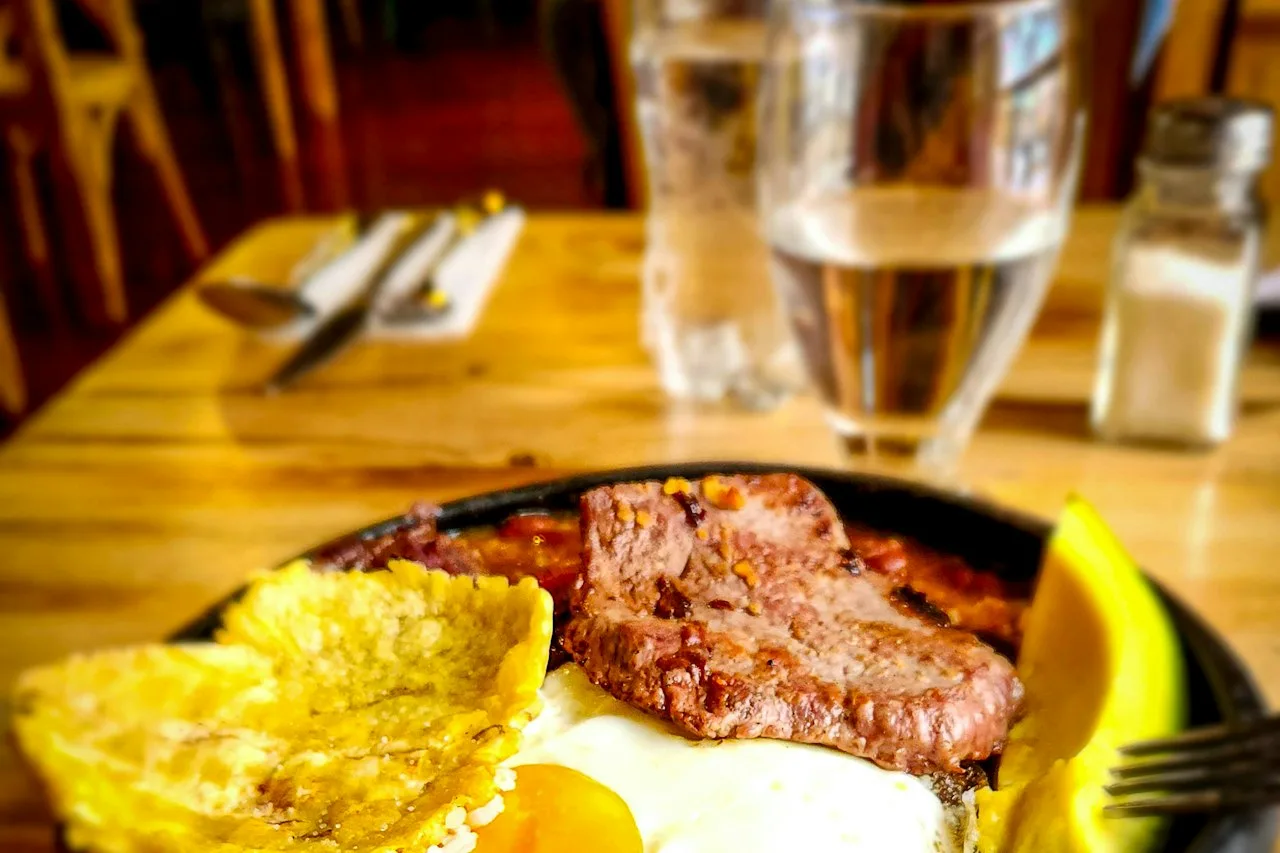
Antioquia's great platter in a home version: red beans with pork, white rice, minced beef, chicharrón, chorizo, fried egg, ripe plantain, arepa and avocado. A hearty meal for sharing, with a plan for getting everything ready on time.
Ingredients
- 300 g Rice (long-grain)
- 4 u Egg
- 4 u Tomato (ripe, for the hogao)
- 4 cloves Garlic (3 for the hogao and 1 for the rice)
- 1 u Carrot
- Salt (to taste)
- 300 ml Vegetable Oil (for the hogao, the rice and for frying)
- 2 u Avocado
- 1 teaspoon Ground Cumin
- 400 g Ground Beef (beef)
- 600 g Pork belly slices (fresh, skin on, cut thick (about 3 cm): 200 g for the beans and 400 g for the chicharrón)
- 4 u Chorizo (fresh cooking chorizo)
- 4 u Spring Onions (or Welsh onions, for the hogao)
- 500 g Kidney Beans (dried)
- 3 u Plantain (one green for the beans and two very ripe ones, with almost black skin, for frying)
- 200 g Yellow Masarepa (or white (precooked maize flour))
- Water (for the beans, the chicharrón, the rice and the arepas)
Instructions
The night before, soak the beans in a large bowl with plenty of cold water.
Drain the beans and put them in a pot with about 2 litres of fresh water, the 200 g of pork belly, the whole carrot and the green plantain, peeled and cut into small pieces. Simmer gently, half covered, until very tender, topping up with hot water if needed; don't add salt until the end. In a pressure cooker about 40 minutes is enough.
2 hr
While they cook, make the hogao: chop the tomatoes, spring onions and 3 garlic cloves and fry them in a frying pan with 3 tablespoons of oil, the cumin and a pinch of salt over medium-low heat until you have a thick, juicy sauce.
20 min
For the chicharrón, score the skin of the pork belly strips without cutting into the meat and rub them with salt. Put them in a wide frying pan with water halfway up and cook over medium heat until the water evaporates. Keep cooking them in the fat they release, turning them and with a lid to hand as they spit, until the skin puffs up and is crisp and golden.
55 min
When the beans are tender, take out the carrot and mash it with a fork along with a ladleful of beans; return the mash to the pot to thicken the broth. Chop the cooked pork belly, return it to the pot, add half the hogao and some salt and simmer gently until the broth is creamy.
15 min
Make the rice: rinse it, fry it for a minute in a pan with 2 tablespoons of oil and the remaining garlic, crushed, add 600 ml of boiling water and salt, and cook covered over the lowest heat for 18 minutes. Leave it to stand, covered, for 5 more minutes.
25 min
Cook the minced beef in a frying pan with 2 tablespoons of the remaining hogao and some salt, breaking it up finely with the spoon, until dry, loose and lightly browned.
12 min
For the arepas, mix the masarepa with a pinch of salt and about 280 ml of lukewarm water and knead until it no longer sticks; let it rest for 5 minutes. Shape 4 balls, flatten them into discs 1 cm thick and cook them in a lightly oiled frying pan or griddle over medium heat, about 6 minutes per side, until they have a toasted crust.
20 min
Prick the chorizos and cook them in a frying pan with about 1 cm of water; once it evaporates, brown them in their own fat. Meanwhile, peel the ripe plantains, cut them into long diagonal slices and fry them in about 1 cm of oil until golden and caramelised.
15 min
Fry the eggs last, with crisp edges and runny yolks, and slice the avocados.
6 min
Build each platter with a mound of rice topped with the fried egg, the minced beef, chicharrón, chorizo, plantain slices, arepa and avocado, and serve the beans on the side in a bowl or on one side of the plate, with the rest of the hogao.
Notes
Bandeja paisa is linked to Colombia's paisa region (Antioquia, Medellín and the Coffee Axis) and brings together on one plate what the farmers and muleteers of the area used to eat; serving it all at once on a large platter caught on in restaurants in the second half of the 20th century. Planning: soak the beans the night before or, better still, cook them the day before, as they improve with resting. On the day, while the beans simmer, make the hogao and the chicharrón, which look after themselves; then the rice and the minced beef, and leave until last whatever needs to be eaten freshly made: arepas, plantain, chorizo and eggs. In Colombia cargamanto beans are used; red kidney or borlotti beans are good substitutes. Antioquian chorizo is fresh and lightly spiced, so look for fresh cooking chorizo rather than a cured one. The plantain for frying should be very ripe, with almost black skin, so it turns sweet and caramelised. Many households add black pudding and lemon wedges, and some put a spoonful of hogao on the arepa. The beans keep for 4 days in the fridge and freeze very well; everything else is best made on the day.
Preserve safety
- Pressure canner: always use the time and pressure of a tested canning recipe and let the canner depressurise on its own before opening it.
- Throw away jars that bulge, leak or spurt when opened. Botulism does not change smell, colour or taste: always follow a tested recipe and keep a preserve in the fridge once opened.
Altitude adjustment
Above 300 m water boils at a lower temperature, so times or pressure must go up.
General guidance, not a substitute for a tested recipe. Sources: AESAN · NCHFP (USDA)
More information
Guide indicatorsDifficulty, quality and data reliability
Guide indicators
- Estimated difficulty91/100
- Recipe completeness60/100
- Nutrition reliability
- No data
Calculated automatically from the ingredients, steps, time and community feedback. They are not a guarantee.
StorageKeeps 3 days in the fridge
I made this
Have you made it? Tell us how it went.
Seasonal recipes, every Friday
One email a week (in Spanish) with what's in season, the monthly challenge and three recipes to try. No account needed.
We'll ask you to confirm by email, and you can unsubscribe with one click. Privacy
Community versions
Would you change something? Publish your version: it will link back to this recipe.
Comments
Log in to leave a comment.
No comments yet
Be the first to comment on this recipe.