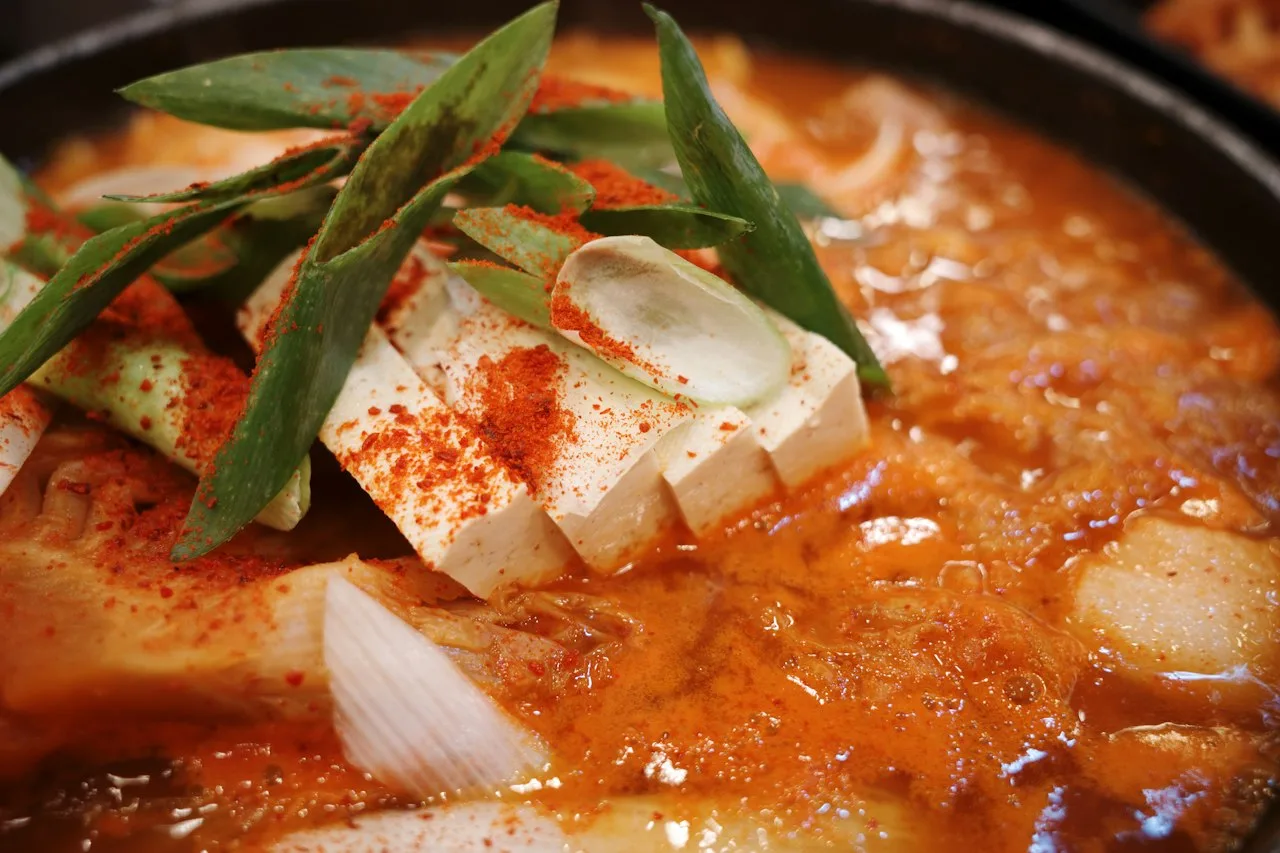
Kimchi jjigae (kimchi stew)
Kimchi jjigae
Contains allergens
Incomplete allergen information: some ingredients have not been reviewed yet. Always check the labels before cooking.
- Author
- Equipo Cocinoa
- Preparation time
- 37 min
- Servings
- 4
Summary
The everyday Korean stew: well-fermented kimchi simmered with pork belly, tofu and its own juice into a red, sour and spicy broth. It comes to the table bubbling, with a bowl of white rice on the side.
Ingredients
- 300 g Rice (short-grain white rice, to serve)
- 300 g Tofu (firm, in 1 cm slices)
- 1 teaspoon Soy sauce (to adjust the seasoning) (optional)
- 1 u Onion (thinly sliced)
- 3 cloves Garlic (chopped)
- 1 teaspoon Sugar (if the kimchi is very sour)
- 1 tablespoon Vegetable Oil
- 2 u Spring Onions (cut on the diagonal)
- 1 teaspoon Sesame Seed Oil
- 1 tablespoon Gochujang (optional)
- 600 ml Water (or dried anchovy stock)
- 400 g Kimchi (well fermented and sour, chopped, plus 120 ml of its juice)
- 250 g Pancetta (fresh pork belly or shoulder, in thin strips)
- 1 tablespoon Gochugaru (Korean chilli flakes) (to taste)
Instructions
Rinse the rice until the water runs almost clear and cook it your usual way so it is ready when the stew is done.
Heat the vegetable oil in a heavy-based pan over medium heat and brown the pork belly until it renders its fat and starts to crisp.
5 min
Add the drained kimchi and the onion and fry, stirring, until the kimchi softens and caramelises slightly at the edges.
6 min
Stir in the garlic, gochugaru and the gochujang if using, and cook for a minute so they toast in the fat.
1 min
Pour in the kimchi juice and water, bring to the boil and simmer, covered, over medium heat until the broth has body. Taste: if it is very sour, add the sugar; if it needs salt, add the soy sauce.
20 min
Lay the tofu slices on top without stirring, so they do not break, and cook until heated through. Add the spring onion and a drizzle of sesame oil and serve bubbling in the pot, with the rice on the side.
5 min
Notes
It is the best way to use up kimchi that has gone past its best: the sourer it is, the better the jjigae, while freshly made kimchi gives a bland stew. Gochugaru, Korean chilli flakes, adds colour and a fruity heat; don't swap it for cayenne, which is far hotter. Frying the kimchi in the pork fat first concentrates the flavour, so don't skip that step. In Korea the broth is usually made with dried anchovies and kombu, but water works very well because the kimchi already brings plenty of flavour. For a meat-free version, replace the pork with shiitake mushrooms and check that the kimchi contains no fish sauce or fermented shrimp. It reheats very well the next day, though the tofu firms up a little.
More information
Guide indicatorsDifficulty, quality and data reliability
Guide indicators
- Estimated difficulty52/100
- Recipe completeness60/100
- Nutrition reliability
- Medium
Calculated automatically from the ingredients, steps, time and community feedback. They are not a guarantee.
StorageKeeps 3 days in the fridge
I made this
Have you made it? Tell us how it went.
Seasonal recipes, every Friday
One email a week (in Spanish) with what's in season, the monthly challenge and three recipes to try. No account needed.
We'll ask you to confirm by email, and you can unsubscribe with one click. Privacy
Community versions
Would you change something? Publish your version: it will link back to this recipe.
Comments
Log in to leave a comment.
No comments yet
Be the first to comment on this recipe.