Chicken paprikash
Paprikás de pollo
Contains allergens
- Author
- Equipo Cocinoa
- Preparation time
- 99 min
- Servings
- 4
Summary
A medium-difficulty recipe for 4 servings. It takes about 99 minutes to make. Each serving has about 1485 kcal. It is nut-free.
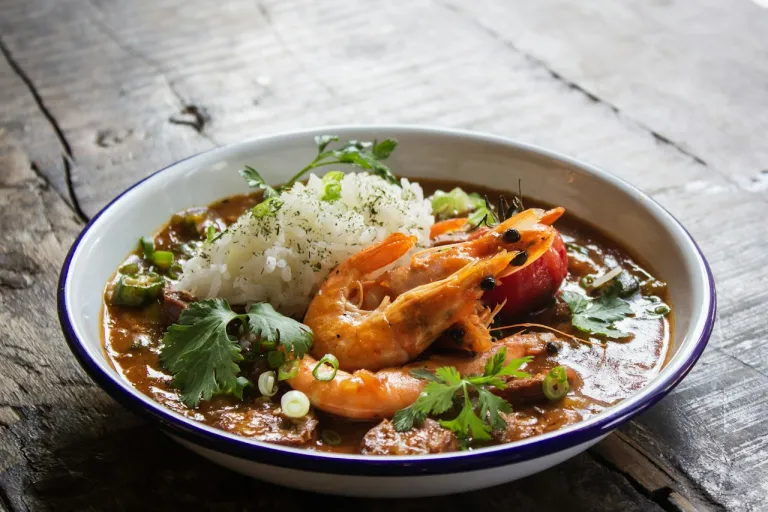
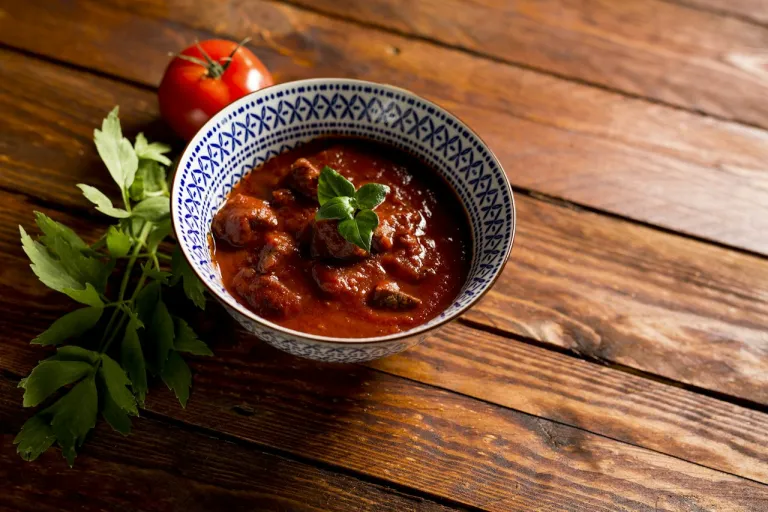
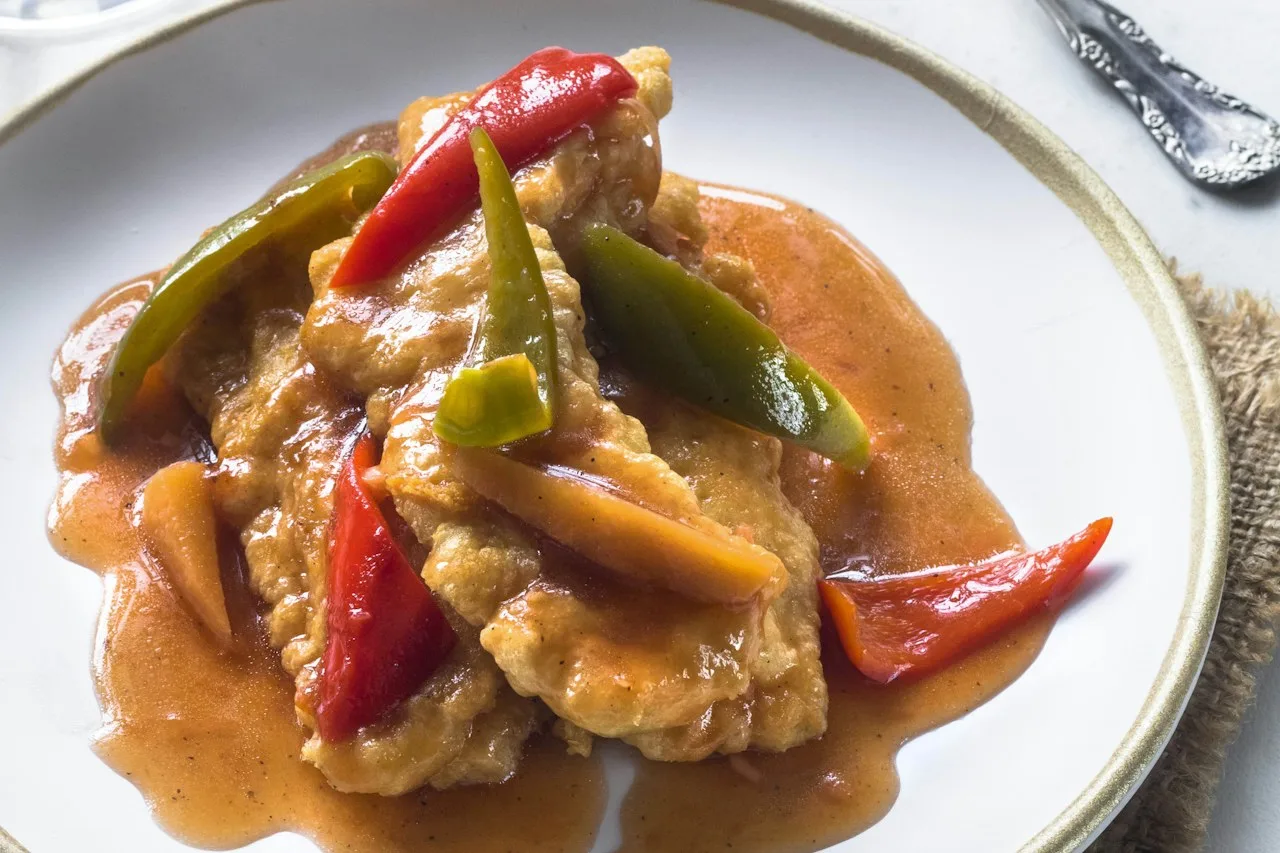
Hungary's best-loved chicken stew: chicken cooked slowly with onion, plenty of sweet paprika, peppers and tomato, finished with soured cream for a creamy, rosy sauce. With the recipe for nokedli, the little egg dumplings served alongside.
Ingredients
- 320 g Wheat flour (300 g for the nokedli and 1 tablespoon for the sauce)
- 20 g Butter (for the nokedli)
- 3 u Egg (for the nokedli)
- 2 u Tomato (ripe, peeled and chopped)
- 2 u Onion (large, finely chopped)
- 2 cloves Garlic (chopped)
- Salt (to taste)
- Black pepper (freshly ground, to taste)
- 2 tablespoons Paprika (sweet, good quality, ideally Hungarian)
- 2 u Green Pepper (long, pale green peppers, cut into strips)
- 250 ml Chicken Stock (or water)
- 8 u Chicken Thighs (bone-in, skin on or off (about 1.2 kg), or a whole chicken, jointed)
- 200 g Sour Cream (or crème fraîche)
- 2 tablespoons Lard (or sunflower oil)
- 150 ml Water (cold, for the nokedli)
Instructions
Pat the chicken dry and salt it. Heat the lard in a wide casserole and brown the thighs over medium-high heat, skin side first, until coloured. Lift them out and set aside.
10 min
In the same fat, over medium-low heat, soften the onion with a pinch of salt until soft and translucent but not browned. Add the garlic and cook for a minute.
12 min
Take the pot off the heat, wait a few seconds and add the paprika, stirring quickly: over direct heat it burns at once and turns bitter. Straight away add the peppers, tomatoes and stock and put the pot back on the heat.
2 min
Return the chicken with its juices, cover and simmer gently, turning it halfway through, until the meat is tender and comes away from the bone.
40 min
While the chicken cooks, make the nokedli batter: beat the eggs with the water and a teaspoon of salt, add 300 g of flour and mix with a wooden spoon to a thick, sticky batter that drops slowly from the spoon. Leave it to rest for 10 minutes.
15 min
Bring a large pan of salted water to the boil. Push the batter through a coarse grater or a large-holed colander with a spatula, or cut it into thin strips from a wet board straight into the water. When the nokedli float to the surface, cook them for 1 or 2 minutes more, drain and toss with the butter.
15 min
Mix the soured cream with 1 tablespoon of flour and temper it with a few spoonfuls of the hot sauce. Lift out the chicken for a moment, stir the cream into the sauce and heat it, stirring, without letting it boil hard, until slightly thickened. Return the chicken, season and serve with the nokedli.
5 min
Notes
Csirkepaprikás is one of Hungary's best-loved home-cooked dishes: Sunday lunch, grandmother's cooking and a staple of simple taverns all over the country. Unlike gulyás, which is a soup, paprikash has little liquid and is finished with soured cream, which gives it a rosy colour and a silky sauce. Its soul is sweet paprika: you use a lot of it, so it must be fresh and of good quality. In Spain any recent sweet paprika, such as the one from Murcia, works well; avoid pimentón de la Vera and other smoked paprikas, which change the character of the dish. The trick is to take the pot off the heat before adding it, as it burns in seconds and turns bitter. The peppers used in Hungary are long and pale green or yellowish; Italian-style frying peppers are good substitutes. There are special graters for nokedli (or galuska), but any coarse grater or colander will do; if you do not feel like making them, serve the stew with short pasta, egg noodles or rice. It keeps for 3 days in the fridge. To freeze it, do so before adding the soured cream (for up to 3 months) and stir the cream in when reheating; the nokedli, tossed in butter, also freeze well and can be reheated in a frying pan.
More information
Nutrition facts1485 kcal per serving
Nutrition facts
- Protein22 %82 g
- Carbs23 %83 g
- Fat55 %90 g
The percentage shows how much of the calories each macronutrient provides.
| Nutrient | Per serving | Per 100 g |
|---|---|---|
| Calories | 1,485 kcal | 165 kcal |
| Protein | 82 g | 9.1 g |
| Carbs | 83 g | 9.2 g |
| Fat | 90 g | 10 g |
One serving is about 901 g of raw ingredients; values per 100 g are based on that weight.
Estimated from the ingredient list · Values may vary depending on cooking method and product brand.
Guide indicatorsDifficulty, quality and data reliability
Guide indicators
- Estimated difficulty59/100
- Recipe completeness65/100
- Nutrition reliability
- High
Calculated automatically from the ingredients, steps, time and community feedback. They are not a guarantee.
StorageKeeps 3 days in the fridge
Frequently asked questions
- How long does Chicken paprikash take to make?
- It takes about 99 minutes in total.
- Which allergens does Chicken paprikash contain?
- It contains cereals containing gluten, milk and eggs. It may contain traces of celery. Always check the labels of the products you use.
- How long does Chicken paprikash keep in the fridge?
- Up to 3 days in the fridge, in a closed container. It can also be frozen.
- How many calories does Chicken paprikash have?
- About 1485 kcal per serving, with 82 g of protein, 83 g of carbohydrates and 90 g of fat. This is an estimate worked out from its ingredients.
- Which diets is this recipe suitable for?
- It is nut-free.
I made this
Have you made it? Tell us how it went.
Seasonal recipes, every Friday
One email a week (in Spanish) with what's in season, the monthly challenge and three recipes to try. No account needed.
We'll ask you to confirm by email, and you can unsubscribe with one click. Privacy
Community versions
Would you change something? Publish your version: it will link back to this recipe.
Comments
Log in to leave a comment.
No comments yet
Be the first to comment on this recipe.