YouTube· from a similar recipe
Baking FAMOUS Norwegian Skoleboller (School Bread) from Lille Betong (open on YouTube)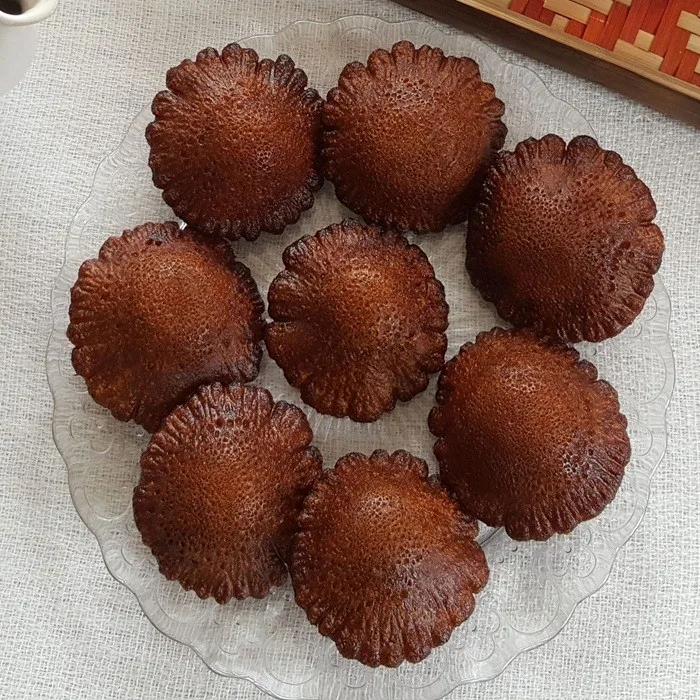
Handesh – Bangladeshi rice flour and date molasses cakes
Media
Contains allergens
Cereales con gluten
Incomplete allergen information: some ingredients have not been reviewed yet. Always check the labels before cooking.
- Author
- TheMealDB
- Preparation time
- Flexible
- Servings
- 9 (estimated)
Nutrition facts
- Protein5 %3 g
- Carbs91 %56 g
- Fat4 %1 g
The percentage shows how much of the calories each macronutrient provides.
| Nutrient | Per serving | Per 100 g |
|---|---|---|
| Calories | 243 kcal | 208 kcal |
| Protein | 3 g | 2.6 g |
| Carbs | 56 g | 47.9 g |
| Fat | 1 g | 0.9 g |
One serving is about 117 g of raw ingredients; values per 100 g are based on that weight.
Estimated from the ingredient list · Values may vary depending on cooking method and product brand.
Guide indicators
- Estimated difficulty39/100
- Recipe completeness45/100
- Nutrition reliability
- High
Calculated automatically from the ingredients, steps, time and community feedback. They are not a guarantee.
Source: TheMealDB · Licence: TheMealDB public API (test key) · Recipe data provided by TheMealDB (www.themealdb.com).
Summary
Dessert - Bangladesh
Ingredients
- 150 g Wheat flour
- 400 ml Water
- 0.25 teaspoons Cinnamon
- 0.25 teaspoons Cardamom
- 250 g Rice Flour
- 250 g Date Molasses
Instructions
Add the molasses to a large mixing bowl and begin by pouring 300ml of water to start with and whisk together. The texture of Bangladeshi molasses varies from a thick syrup to slightly set. I use brands such as Zilani or Akza. If the set is very syrupy (like golden syrup) you will only require 300–325ml of water
Pour in the flours and spices (if using) and whisk for 3–5 minutes, until you have a smooth batter. You need to check carefully for lumps, as they prevent the handesh from rising and will cause them to split. Cover the batter and rest for 2 hours
After 2 hours, thoroughly whisk the batter until smooth, as the rice flour will have settled at the bottom of the bowl. The batter should have a fairly thick consistency, yet remain loose enough to pour – similar to thick pancake or waffle batter. It should form ribbons as you drag the whisk though it
Take a cast-iron korai or wok and add enough oil to half-fill the pan, or enough to deep-fry and turn the heat to high. Once the oil is hot reduce the heat to low–medium. Drop in a teaspoon of batter to test the oil – if it rises slowly to the surface the oil is ready
Pour batter in a quick steady stream into the centre of the pan, preferably using a pyrex jug with a pouring spout (About 45ml of batter for each cake). It should rise to the surface in about 15–20 seconds and slowly puff up. If it rises too quickly, just turn the heat down slightly. Cook for 45 seconds, or until the underside is golden. Carefully turn over and cook for a further 30–45 seconds, until golden. Make sure to not let excess batter drip into the pan as this may prevent the cakes from rising and always fry one at a time
If the batter splits while frying, whisk in 2 tablespoons of flour to the mixture and try again. You should be creating handesh which are about the size of a digestive biscuit
Use a slotted spoon to remove the handesh and place on kitchen towel with frilled edge facing down while you continue frying the reaming batter. This helps retain the shape of the cakes
Enjoy hot, fresh out of the pan. Once cool, place in an airtight container overnight and in the fridge for up to a week. Reheat in a warm oven for a few minutes to refresh or on a tawa or frying pan over a very low heat, turning a few times
Videos and links
Third-party content linked to its creators. The Cocinoa recipe is the one on this page.
Comments
Log in to leave a comment.
No comments yet
Be the first to comment on this recipe.