Tempura
Contains allergens
Incomplete allergen information: some ingredients have not been reviewed yet. Always check the labels before cooking.
- Author
- Equipo Cocinoa
- Preparation time
- 57 min
- Servings
- 4
Summary
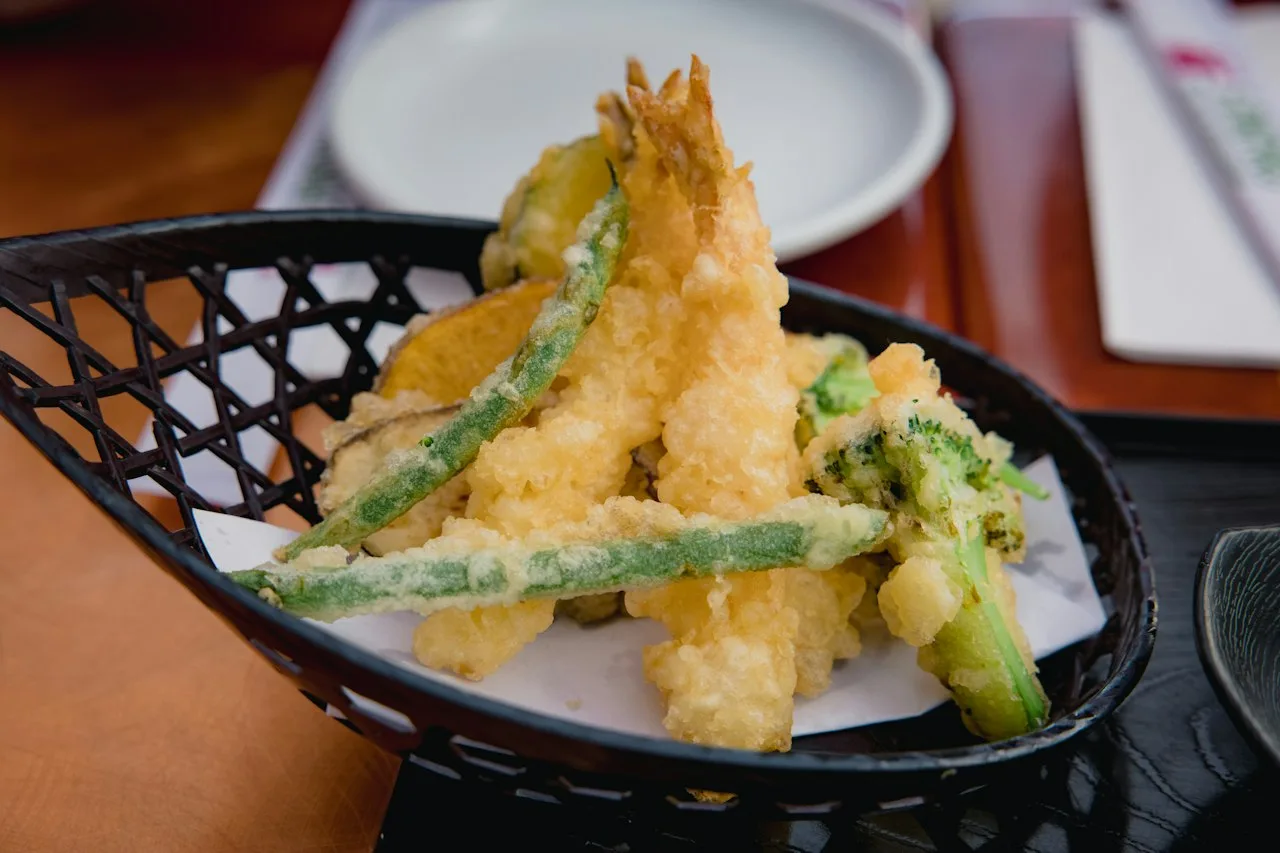
Prawns and vegetables in a wafer-thin, crisp, almost see-through batter made with ice-cold sparkling water and barely mixed. Served with tentsuyu dipping sauce of dashi, soy and mirin, and grated daikon.
Ingredients
- 170 g Wheat flour (plain, chilled in the fridge, 150 g for the batter and the rest for dusting)
- 1 u Egg (well chilled)
- 12 u Prawns (large raw king prawns, whole)
- 50 ml Soy sauce
- Salt (to serve, to taste)
- 1 piece Ginger (fresh, about 2 cm) (optional)
- 1.5 l Sunflower Oil (for deep-frying)
- 1 u Aubergine (small)
- 1 piece Daikon Radish (about 8 cm)
- 120 g Green Beans (fine)
- 8 leaves Kale (small, or 8 shiso leaves)
- 1 u Sweet Potatoes (small)
- 50 ml Mirin
- 250 ml Soda Water (ice-cold)
- 200 ml Dashi stock
Instructions
Make the tentsuyu: put the dashi, soy sauce and mirin in a small pan, bring to the boil and take off the heat; it is served warm in individual bowls. Grate the daikon and ginger, squeeze them lightly by hand and shape into little mounds on a plate.
5 min
Peel the prawns, leaving the last shell segment and the tail. Remove the vein with a cocktail stick, snip the tip of the tail on the diagonal and scrape out the water inside it with a knife so it does not spit. Make 4 or 5 shallow cuts along the underside and press each prawn against the board until you feel a slight crack: this keeps them straight when fried. Pat them very dry.
15 min
Wash and dry the vegetables. Cut the unpeeled sweet potato into 5 mm rounds and the aubergine into thick diagonal slices; top and tail the beans. Leave the leaves whole and make sure they are completely dry.
10 min
Heat the oil, at least 5 cm deep, in a deep pan or wok to 170 °C. Have a wire rack set over kitchen paper ready beside it.
8 min
Make the batter only now: beat the egg in a bowl, add the ice-cold sparkling water and mix. Sift the 150 g of flour over it all at once and stir with chopsticks for just 10 to 15 seconds, stabbing rather than whisking: there should be lumps and some dry flour left.
2 min
Fry the vegetables first: dust each piece in a little flour, shake it off, dip it in the batter, let the excess drip off and lower it into the oil. Fry in batches of 4 or 5 pieces, turning once, until the batter is crisp and only just golden; the sweet potato needs about 3 minutes and the leaves half a minute. Drain them standing up on the rack.
12 min
Raise the oil to 180 °C and fry the prawns in the same way, holding them by the tail, for 1½ to 2 minutes until crisp. Meanwhile, skim off any floating bits of batter with a slotted spoon.
5 min
Serve at once, with the tentsuyu and daikon on the side and a little salt for anyone who prefers it. Stir the daikon into the sauce and dip each piece for just a moment, without leaving it to soak.
Notes
Tempura reached Japan with Portuguese traders in the 16th century (the name probably comes from the Ember Days, the quatuor tempora when meat was forbidden), and in the Edo of the following centuries it became street-stall food and, later, an art. The keys are cold and speed: the flour, egg and water must be ice-cold, and the batter is mixed with chopsticks for only a few seconds, leaving lumps, so no gluten develops; a smooth batter fries heavy and greasy. Make it just before frying and, if it has to wait, set the bowl over another one filled with ice. Fry in small batches so the oil does not cool down: vegetables at 170 °C and prawns at 180 °C, and skim off stray bits of batter between batches or they will burn. If you can find shiso leaves, batter them on the underside only: they come out like green glass. Other vegetables that work well are pumpkin, shiitake mushrooms, green pepper and onion rings. Tempura does not keep and is eaten straight from the fryer. Let the oil cool and strain it: it will do one or two more fry-ups.
More information
Guide indicatorsDifficulty, quality and data reliability
Guide indicators
- Estimated difficulty63/100
- Recipe completeness55/100
- Nutrition reliability
- No data
Calculated automatically from the ingredients, steps, time and community feedback. They are not a guarantee.
StorageJapanese
I made this
Have you made it? Tell us how it went.
Community versions
Would you change something? Publish your version: it will link back to this recipe.
Comments
Log in to leave a comment.
No comments yet
Be the first to comment on this recipe.