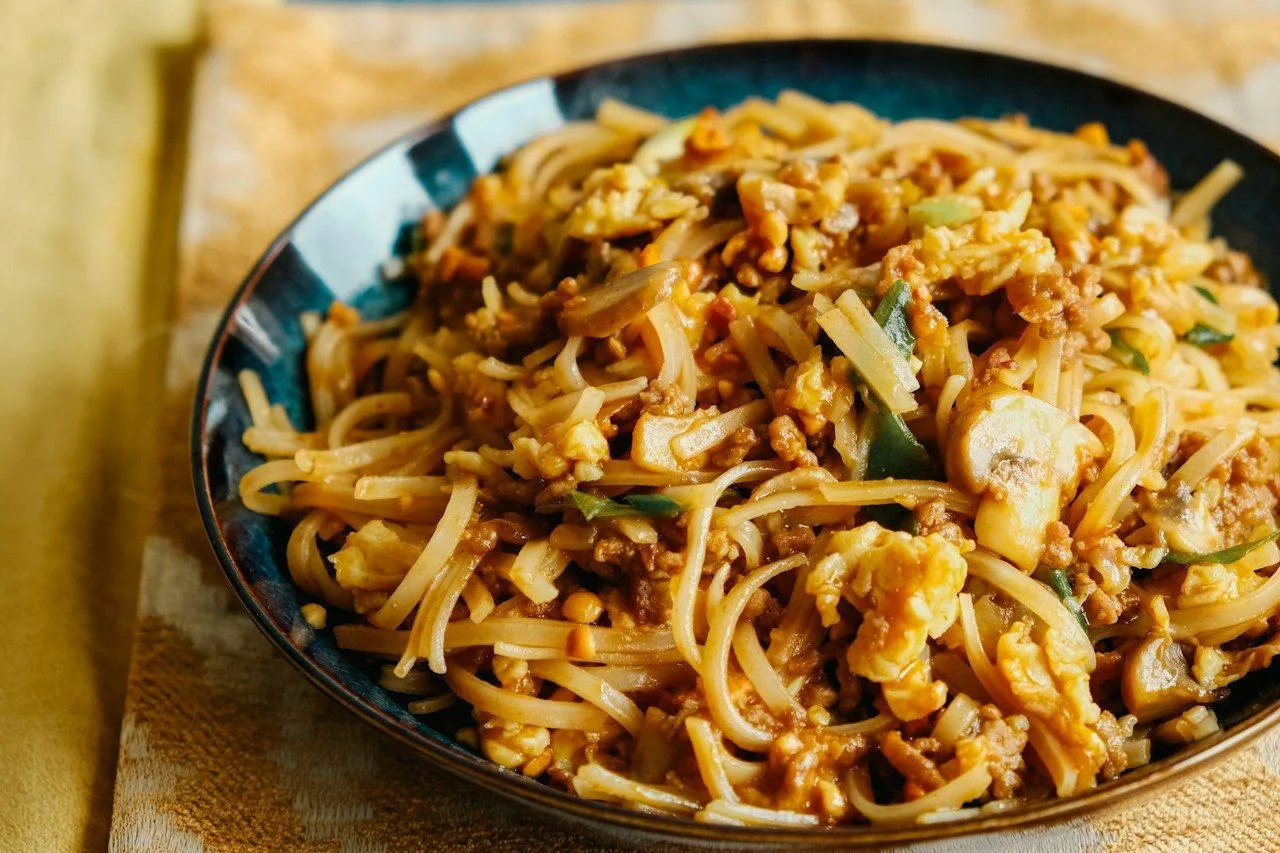
Yaki udon
Contains allergens
Incomplete allergen information: some ingredients have not been reviewed yet. Always check the labels before cooking.
- Author
- Equipo Cocinoa
- Preparation time
- 29 min
- Servings
- 2
Summary
An easy recipe for 2 servings. It takes about 29 minutes to make. Each serving has about 1307 kcal. It is dairy-free and nut-free.
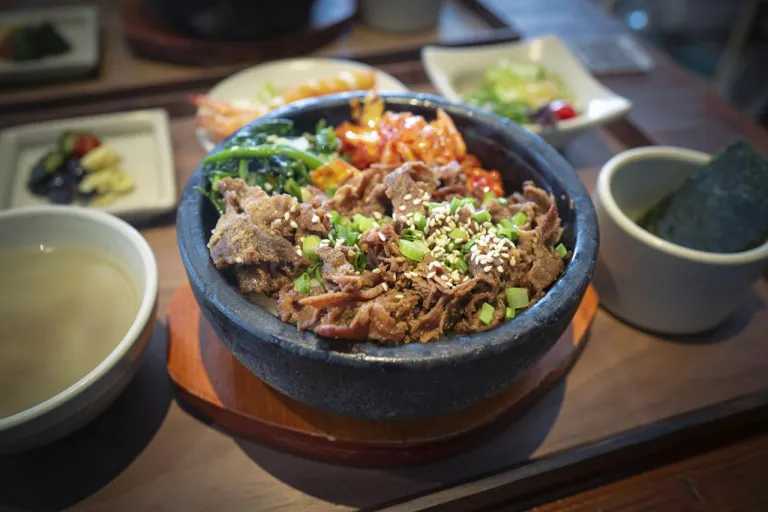
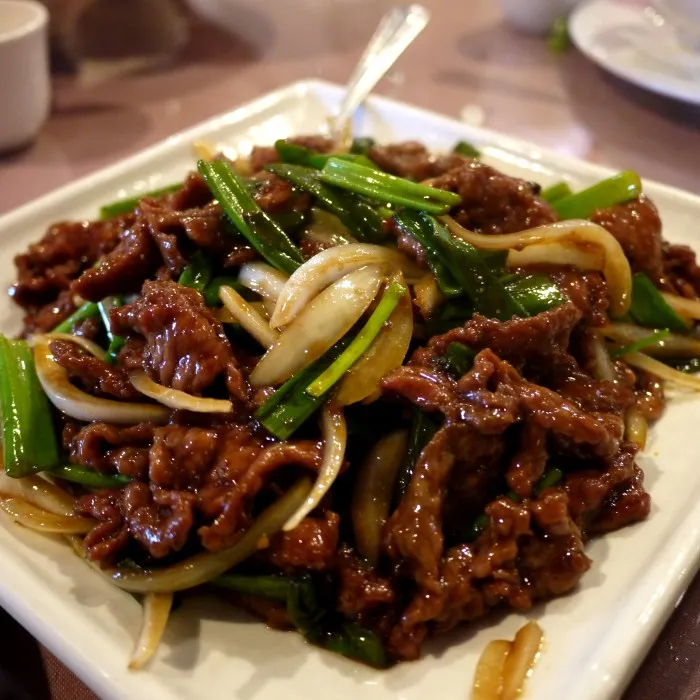
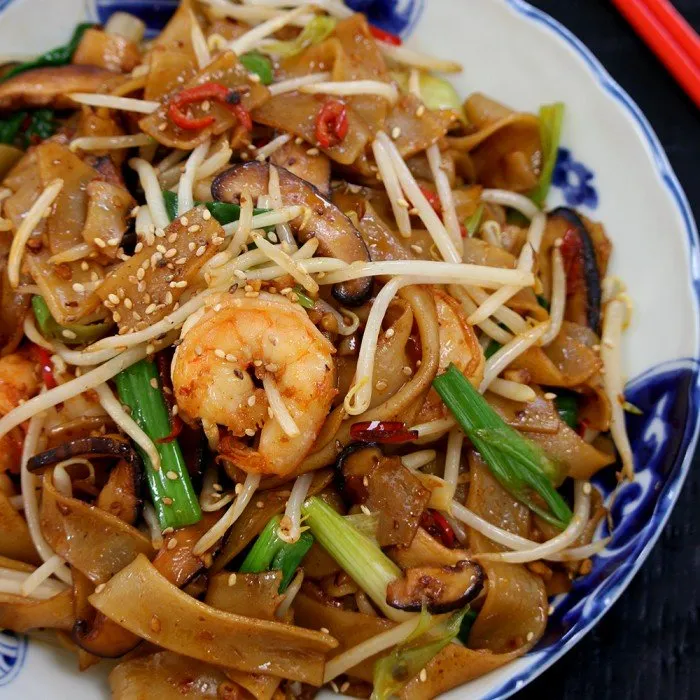
Thick udon noodles stir-fried with pork belly, cabbage, carrot, onion and shiitake in a sauce of soy, mirin and oyster sauce. Finished with bonito flakes, seaweed flakes and red pickled ginger: a Japanese supper in 20 minutes.
Ingredients
- 2 tablespoons Soy sauce
- 0.5 u Onion (thinly sliced into wedges)
- 1 u Carrot (in thin batons)
- Black pepper (freshly ground, to taste)
- 1 teaspoon Sugar
- 1 tablespoon Sunflower Oil
- 200 g Cabbage (cut into 3 cm pieces)
- 150 g Pork belly slices (thin, cut into 4 cm pieces, or chicken thigh in strips)
- 2 u Spring Onions (cut into 3 cm lengths)
- 1 tablespoon Oyster Sauce (or Worcestershire sauce)
- 1 teaspoon Sesame Seed Oil
- 4 u Shiitake Mushrooms (fresh, sliced)
- 1 tablespoon Mirin
- 400 g Udon Noodles (two portions, ideally frozen)
- 1 handful Bonito flakes (katsuobushi) (optional)
- 1 teaspoon Nori seaweed (flaked (aonori) or in fine strips) (optional)
- 1 tablespoon Red pickled ginger (beni shoga) (optional)
Instructions
Bring a pan of water to the boil. Add the frozen udon and leave for 1 minute, just until they separate; if they are vacuum-packed, dip them for 30 seconds and loosen them with chopsticks. Drain well and set aside.
5 min
Mix the soy sauce, mirin, oyster sauce and sugar in a glass. Have all the vegetables cut before you start, because the stir-fry moves very fast.
10 min
Heat the oil in a wok or large frying pan over medium-high heat and fry the pork belly until it renders its fat and the edges are crisp. If using chicken, stir-fry it until cooked through.
4 min
Add the onion and carrot and stir-fry for 2 minutes. Add the shiitake and cabbage and stir-fry for 2 or 3 minutes more, until the cabbage is tender but still crunchy.
5 min
Add the udon and stir-fry for 2 minutes, lifting them with chopsticks or tongs so they do not break; if they stick, add a tablespoon of water. Pour in the sauce, add the spring onions and stir-fry for 1 more minute, until the noodles are glossy and well coated. Turn off the heat and drizzle with the sesame oil and a little pepper.
4 min
Serve at once, topped if you like with the bonito flakes, which will dance in the heat, the seaweed flakes and the red pickled ginger.
1 min
Notes
Yaki udon was born in Kokura, in the city of Kitakyushu (in the north of the island of Kyushu), shortly after the Second World War: as the story goes there, a cook wanted to make yakisoba and, unable to find noodles for soba, used udon instead. Today it is a quick home dish for using up whatever is in the fridge. The best udon for stir-frying are frozen ones, which are springier than the vacuum-packed kind: drop them still frozen into boiling water for just a minute, until they come apart, as they finish heating in the pan. Loosen vacuum-packed noodles by dipping them in hot water; do not pull them apart dry or they will break. Thinly sliced pork belly provides the fat to fry the vegetables in; chicken thigh in strips is just as good, as long as it is cooked through with no trace of pink. Worcestershire sauce, sharper and spicier, can replace the oyster sauce and is reminiscent of the sauce used to season Japanese yakisoba. For a vegetarian version, use browned firm tofu and replace the oyster sauce with an extra teaspoon of soy sauce and one of sugar. Bonito flakes, aonori (flaked green seaweed, which can be swapped for very finely cut nori) and red pickled ginger are optional, but they give it the feel of a Japanese food stall. Eat it freshly made; leftovers keep for a day in the fridge and can be reheated in a frying pan with a tablespoon of water.
More information
Nutrition facts1307 kcal per serving
Nutrition facts
- Protein12 %38 g
- Carbs52 %170 g
- Fat36 %52 g
The percentage shows how much of the calories each macronutrient provides.
| Nutrient | Per serving | Per 100 g |
|---|---|---|
| Calories | 1,307 kcal | 239 kcal |
| Protein | 38 g | 6.9 g |
| Carbs | 170 g | 31 g |
| Fat | 52 g | 9.5 g |
One serving is about 548 g of raw ingredients; values per 100 g are based on that weight.
Estimated from the ingredient list · Values may vary depending on cooking method and product brand.
Guide indicatorsDifficulty, quality and data reliability
Guide indicators
- Estimated difficulty45/100
- Recipe completeness60/100
- Nutrition reliability
- Medium
Calculated automatically from the ingredients, steps, time and community feedback. They are not a guarantee.
StorageKeeps 1 day in the fridge
Frequently asked questions
- How long does Yaki udon take to make?
- It takes about 29 minutes in total.
- Which allergens does Yaki udon contain?
- It contains cereals containing gluten, soya, molluscs, sesame and fish. It may contain traces of crustaceans. Some of its ingredients have not had their allergens reviewed yet, so this list may be incomplete. Always check the labels of the products you use.
- How long does Yaki udon keep in the fridge?
- Up to 1 day in the fridge, in a closed container.
- How many calories does Yaki udon have?
- About 1307 kcal per serving, with 38 g of protein, 170 g of carbohydrates and 52 g of fat. This is an estimate worked out from its ingredients.
- Which diets is this recipe suitable for?
- It is dairy-free and nut-free.
I made this
Have you made it? Tell us how it went.
Seasonal recipes, every Friday
One email a week (in Spanish) with what's in season, the monthly challenge and three recipes to try. No account needed.
We'll ask you to confirm by email, and you can unsubscribe with one click. Privacy
Community versions
Would you change something? Publish your version: it will link back to this recipe.
Comments
Log in to leave a comment.
No comments yet
Be the first to comment on this recipe.