- Coffee
- 18 g
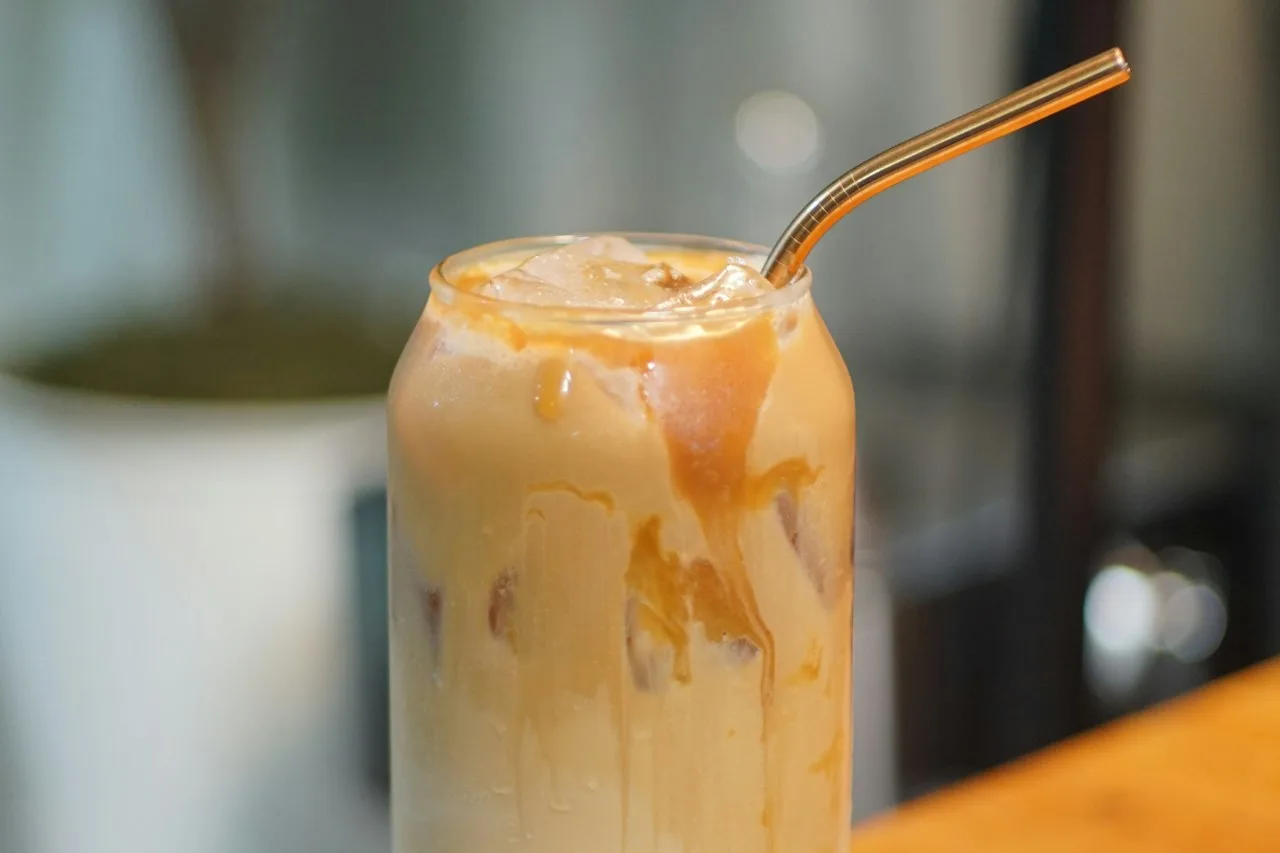
Vanilla syrup at the bottom, steamed milk, an espresso that marks the foam from above and homemade caramel sauce in a crosshatch. The big coffee-shop classic, made at home from start to finish. Serves four.
By Equipo Cocinoa
What you need
Tap each piece to see its catalogue entry.
- EssentialEspresso coffee makerWater to 9 bars of pressure through fine and pressed coffee. Here are the machine types, from the lever to the double boiler.€150–3500approx.View on Amazon
- RecommendedEspresso grinderElectric grinder with very fine adjustment, designed for espresso. It matters more than the machine itself.€150–700approx.View on Amazon
- RecommendedMilk jarThe steel pitcher with peak to vaporize and texturize the milk. It helps you get microfoam and draw in the cup.€10–30approx.View on Amazon
- RecommendedCazoThe oldest and most simple method: coffee and water in a bowl, rest and decantation. It serves for the puchero coffee, the cowboy coffee and even the Turkish.€10–30approx.View on Amazon
- OptionalThermometerTo know what temperature the water, milk or grain are at. Useful if your kettle does not regulate and almost compulsory to toast.€8–30approx.View on Amazon
- OptionalGlass jarA glass jar with a lid serves the cold brew, to shake drinks and to save coffee. The cheapest accessory.€2–10approx.View on Amazon
- Optional0,1 g baseA scale with precision of 0,1 g and timer. Weighing coffee and water is the easiest way to repeat a good cup.€15–250approx.View on Amazon
As an Amazon Associate I earn from qualifying purchases.
No Espresso coffee maker? This works too
- Italian coffee maker (moka)€20–60The life-long stove coffee maker: the steam pushes the water through the coffee. Intense, with body and very cheap.
- AeroPress€35–55A plastic cylinder with plunger: immersion and a soft pressure. Versatile, resistant and almost unbreakable. Ideal for travel.
- Portable espresso€130–350Hand and compact equipment, type Picopresso or Flair, that reach the pressure of the espresso without electricity. To travel or to begin.
Method
For the syrup, heat 100 ml of water with 100 g of sugar over a medium heat, stirring, until it boils and the sugar dissolves. Turn off the heat, add the vanilla extract and pour it into a clean jar.
5 min
For the caramel, put the other 100 g of sugar and 30 ml of water in a heavy-based saucepan. Heat over a medium heat without stirring, swirling the pan now and then, until it turns amber, like dark honey.
8 min
Take the pan off the heat and add the cream little by little, carefully, as it bubbles up and gives off very hot steam. Whisk until smooth.
Add the butter and the salt, put the pan back on the heat and let it simmer gently for 1 minute, stirring all the time. Pour the sauce into a jar and let it cool slightly: it thickens as it cools. You will get about 180 ml.
1 min
Put 20 ml of vanilla syrup (4 teaspoons) in each warmed glass or mug.
Steam the milk in two batches, 200 ml per glass, to 60–65 °C, with a little more foam than for a latte, and pour it over the syrup.
Make the 36–40 ml double espressos one at a time (see the ‘Espresso’ recipe) in a small jug with a spout and pour them slowly into the centre, through the foam: they will leave a dark mark on top, the ‘stain’ that gives the macchiato its name.
Finish with a tablespoon of caramel (15 ml) in a crosshatch: a few lines one way, a few across and a ring around the edge. Serve unstirred.
Tips and warnings
Despite the name, it is not an Italian macchiato, which is an espresso with a dab of foam: it is a vanilla latte macchiato with caramel on top. It was born in the big American coffee-shop chains in the mid-nineties and is now ordered all over the world. It is drunk unstirred: the first sip is strong and bitter, and it gets sweeter towards the bottom.
- Steam the milk to 60–65 °C with a little more foam than for a latte: that way the espresso goes through the foam and leaves its mark on top.
- The caramel sauce keeps for about 2 weeks in the fridge in a sealed jar; it sets when cold, so warm it for a few seconds in a bain-marie before use. The vanilla syrup keeps for about 3 weeks.
- If the caramel crystallises and turns grainy, add a splash of water and heat it again. If it goes past dark amber, it turns bitter.
- Iced: syrup in a tall glass, ice to the top, 180 ml of cold milk, the espresso slowly over it and the caramel last, as in the ‘Iced latte’.
- For a more fragrant syrup, make it with a vanilla pod, as in the ‘Vanilla latte’.
One last thing
Vanilla below, caramel above and the espresso marking the middle. If it has left its mark on you, leave yours on us with a ko‑fi.