- Coffee
- 9 g
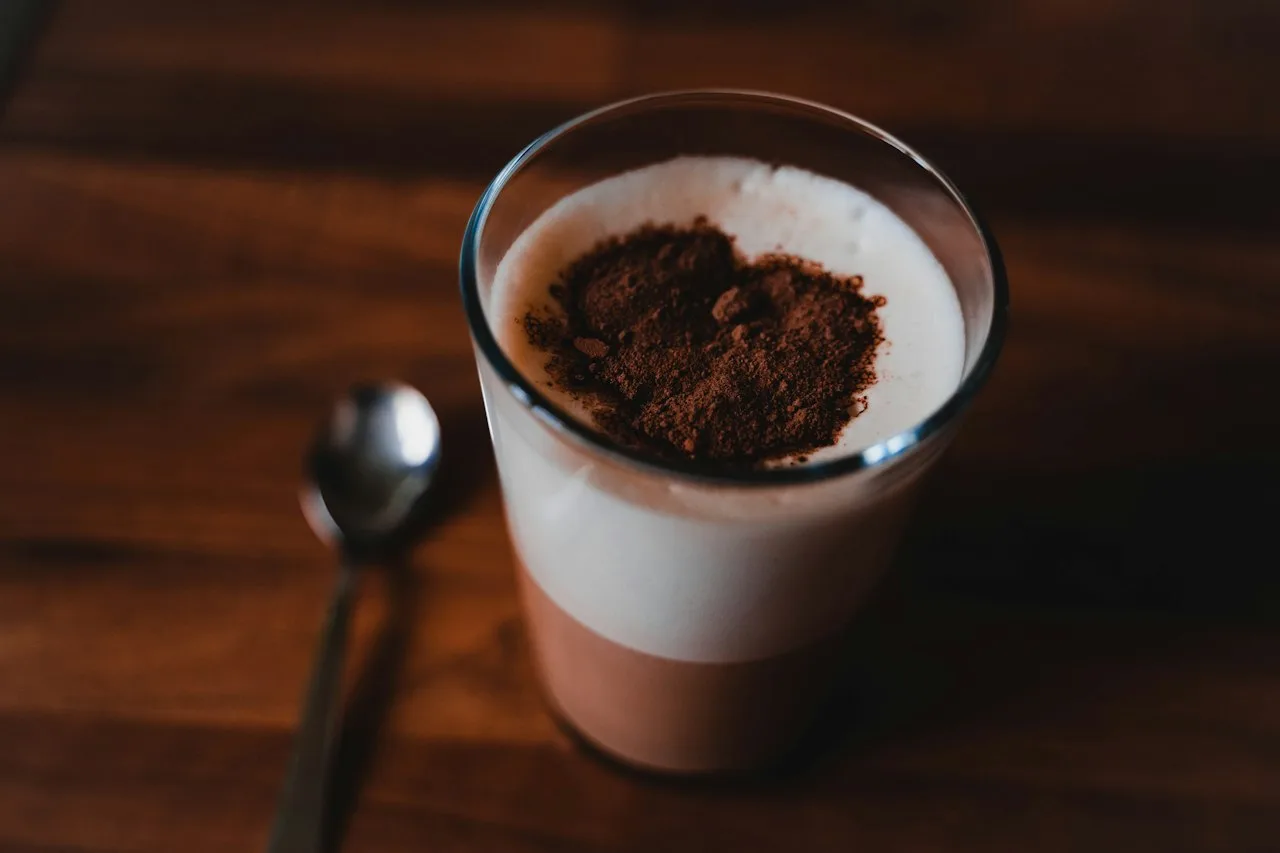
The little coffee from Alessandria, in Piedmont: cocoa in the bottom, espresso, a dense milk foam and more cocoa on top, all in a small glass.
By Equipo Cocinoa
What you need
Tap each piece to see its catalogue entry.
- EssentialEspresso coffee makerWater to 9 bars of pressure through fine and pressed coffee. Here are the machine types, from the lever to the double boiler.€150–3500approx.View on Amazon
- RecommendedEspresso grinderElectric grinder with very fine adjustment, designed for espresso. It matters more than the machine itself.€150–700approx.View on Amazon
- RecommendedMilk jarThe steel pitcher with peak to vaporize and texturize the milk. It helps you get microfoam and draw in the cup.€10–30approx.View on Amazon
- Optional0,1 g baseA scale with precision of 0,1 g and timer. Weighing coffee and water is the easiest way to repeat a good cup.€15–250approx.View on Amazon
- OptionalMilk spumerMilk spuma without espresso machine: with a hand-to-battery mixer or an electric pitcher that heats and beats at the same time.€10–100approx.View on Amazon
As an Amazon Associate I earn from qualifying purchases.
No Espresso coffee maker? This works too
- Portable espresso€130–350Hand and compact equipment, type Picopresso or Flair, that reach the pressure of the espresso without electricity. To travel or to begin.
- Italian coffee maker (moka)€20–60The life-long stove coffee maker: the steam pushes the water through the coffee. Intense, with body and very cheap.
- AeroPress€35–55A plastic cylinder with plunger: immersion and a soft pressure. Versatile, resistant and almost unbreakable. Ideal for travel.
Method
Warm a small 100–120 ml glass with hot water and dry it well.
Dust 1 g of cocoa into the bottom and turn the glass so it streaks the sides a little. If you prefer chocolate, melt 5 g and spread it in a thin layer over the bottom.
Make a 25–30 ml espresso (see the ‘Espresso’ recipe) and pour it into the glass.
Froth 60 ml of milk to 55–60 °C, letting in plenty of air, until you have a dense, firm foam, thicker than for a cappuccino.
Spoon the foam up to the rim, dust the rest of the cocoa on top and serve straight away, with the sugar on the side.
Tips and warnings
It was born in the bars of Alessandria, in Piedmont, and is often seen as a quick cousin of Turin's ‘Bicerin’. The name is usually put down to its colour, close to that of Moroccan leather, which Italians call ‘marocchino’.
- Outside Piedmont, bars often coat the glass with chocolate hazelnut spread: it ends up sweeter and contains tree nuts.
- The most common mistake is a runny foam: the cocoa on top sinks and the layers are lost.
- No machine? A very short coffee from a moka pot will do, although it comes out less intense.
One last thing
Cocoa below, cocoa above and an espresso in between. If it has brightened your afternoon, sprinkle a ko‑fi our way.