- Coffee
- 9 g
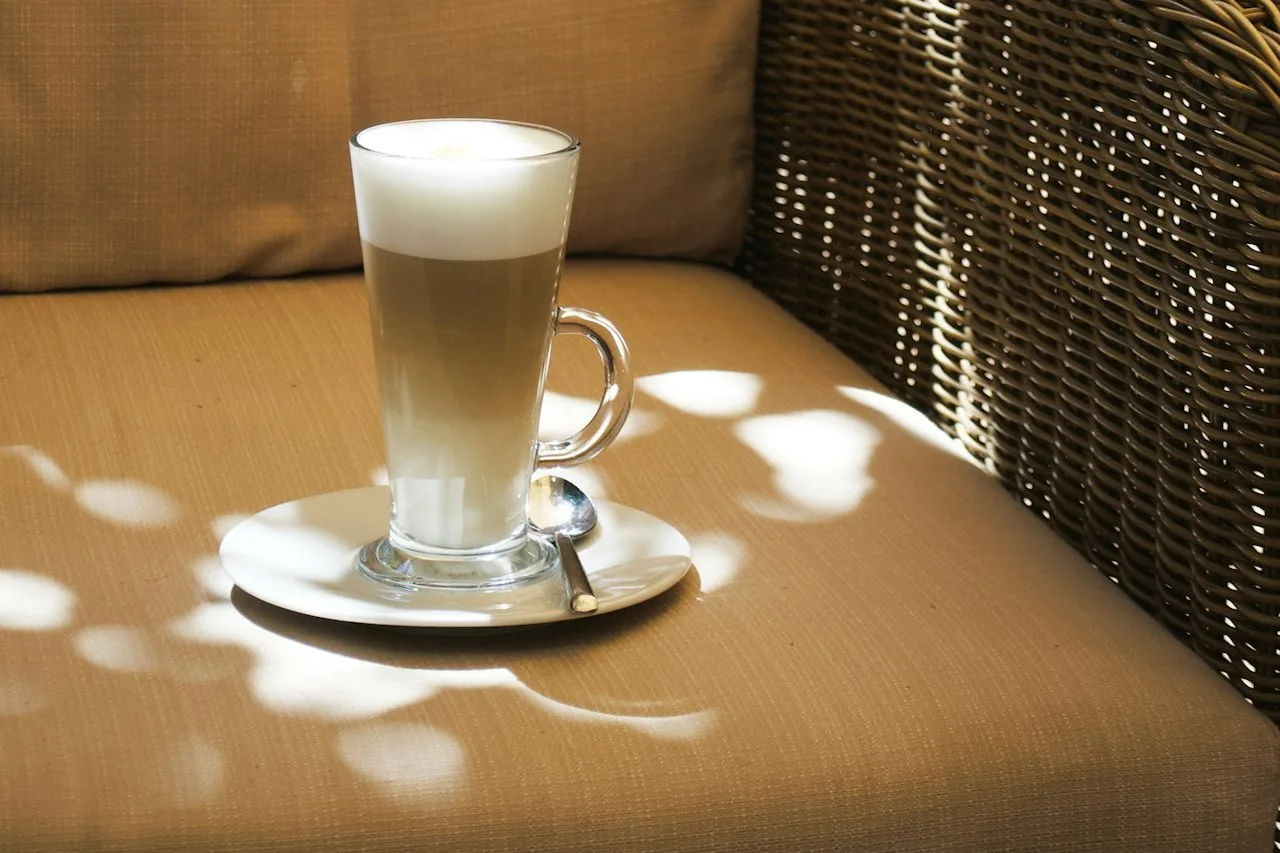
Lisbon's milky coffee: a bica and three parts frothed milk in a tall glass on a saucer. Gentle, layered and perfect with a pastel de nata.
By Equipo Cocinoa
What you need
Tap each piece to see its catalogue entry.
- EssentialEspresso coffee makerWater to 9 bars of pressure through fine and pressed coffee. Here are the machine types, from the lever to the double boiler.€150–3500approx.View on Amazon
- RecommendedEspresso grinderElectric grinder with very fine adjustment, designed for espresso. It matters more than the machine itself.€150–700approx.View on Amazon
- RecommendedMilk jarThe steel pitcher with peak to vaporize and texturize the milk. It helps you get microfoam and draw in the cup.€10–30approx.View on Amazon
- OptionalThermometerTo know what temperature the water, milk or grain are at. Useful if your kettle does not regulate and almost compulsory to toast.€8–30approx.View on Amazon
- OptionalMilk spumerMilk spuma without espresso machine: with a hand-to-battery mixer or an electric pitcher that heats and beats at the same time.€10–100approx.View on Amazon
As an Amazon Associate I earn from qualifying purchases.
No Espresso coffee maker? This works too
- Portable espresso€130–350Hand and compact equipment, type Picopresso or Flair, that reach the pressure of the espresso without electricity. To travel or to begin.
- Italian coffee maker (moka)€20–60The life-long stove coffee maker: the steam pushes the water through the coffee. Intense, with body and very cheap.
- AeroPress€35–55A plastic cylinder with plunger: immersion and a soft pressure. Versatile, resistant and almost unbreakable. Ideal for travel.
Method
Warm a tall glass of about 250 ml with hot water, dry it and set it on a saucer.
Steam 150 ml of milk to 60–65 °C, letting in air at the start to get about 2 cm of soft foam.
Pour the milk into the glass, holding back the foam with a spoon and letting it slide in at the end.
Make a bica, a 40–50 ml espresso (see the ‘Espresso’ recipe), in a small jug with a spout.
Pour the coffee very slowly into the centre, through the foam: it will settle between the milk and the foam in layers. Serve with a long spoon and the sugar on the side.
Tips and warnings
In Portugal people order a galão in cafés and pastry shops at any time of day, often with toast or a pastel de nata. The classic ratio is one part coffee to three parts milk, and every bar tweaks it in its own way.
- The family: a ‘garoto’ is the small version in a cup and a ‘meia de leite’ is half and half, also in a cup. You can ask for it ‘escuro’, with more coffee, or ‘claro’, with less.
- In Lisbon an espresso is a ‘bica’; in Porto, a ‘cimbalino’.
- For the layers to show, the coffee has to go in slowly and the milk should not go above 65 °C.
- No machine? A short coffee from a moka pot or an AeroPress works well, although the layers are less defined.
One last thing
One part coffee, three parts milk and a Portuguese-style pause. Shall we add a fourth part of ko‑fi?